
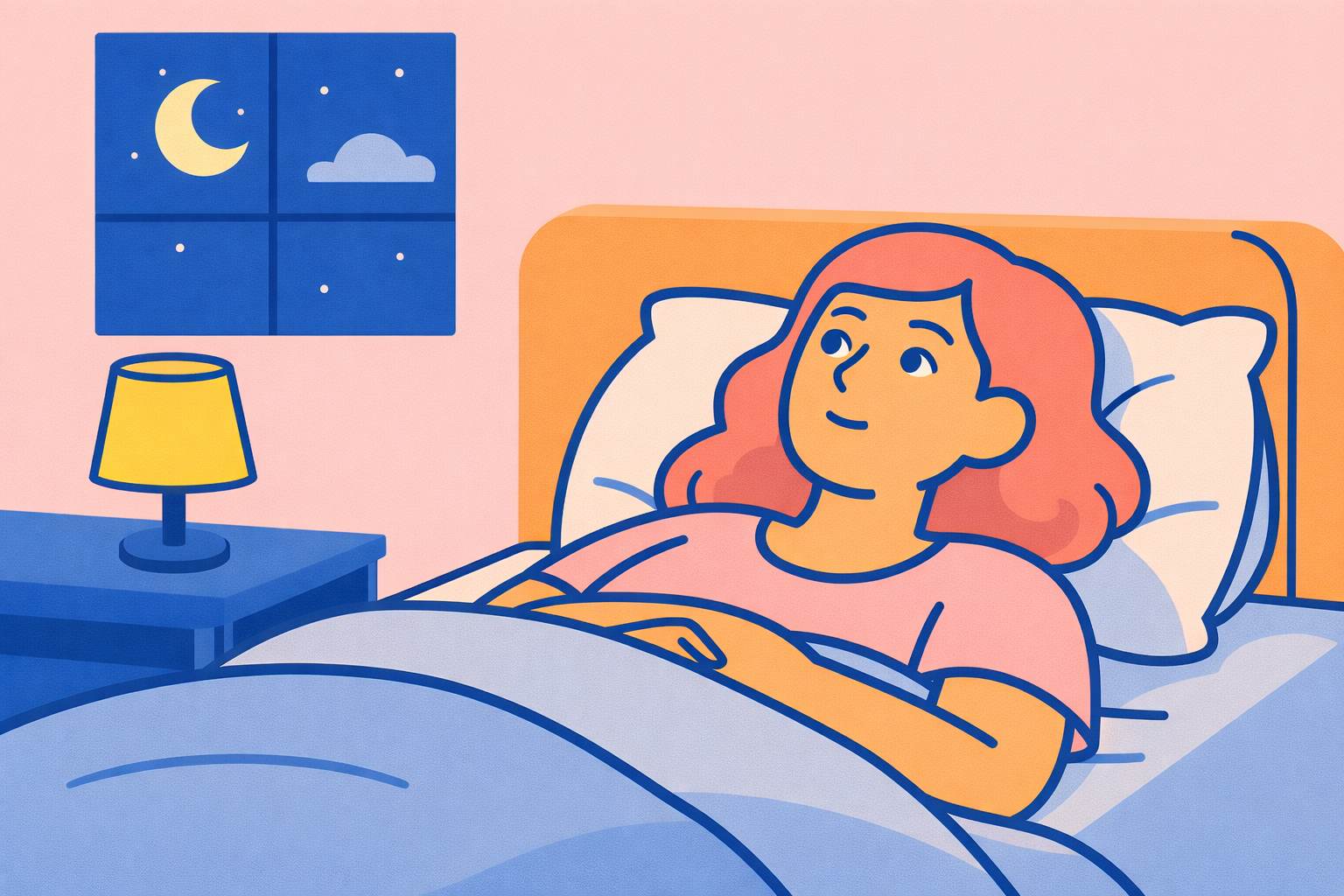
Many moms lie awake at night feeling tense, alert, or mentally busy and immediately assume something is wrong with their sleep. It’s easy to label those nights as insomnia. But for many moms, what’s happening isn’t a sleep disorder at all. It’s anxiety showing up once the day finally ends.
Nighttime anxiety in moms often looks like trouble sleeping, but the cause is very different. Understanding that difference can bring relief, because it shifts the focus from forcing sleep to understanding what your mind and body are actually doing.
Why anxiety can look like insomnia at night
From the outside, nighttime anxiety and insomnia can look the same. You’re in bed, exhausted, but your mind won’t slow down. Thoughts keep coming. Your body feels tired, yet alert. Sleep feels just out of reach.
The difference is intention. With insomnia, sleep itself is disrupted even when the mind feels calm. With nighttime anxiety, sleep is blocked because the nervous system is still active. Your body hasn’t fully shifted into rest mode yet.
What nighttime anxiety actually feels like for moms
Nighttime anxiety often feels like mental restlessness. You may replay the day, worry about tomorrow, or feel a vague sense of unease without a clear reason. Your thoughts jump from one topic to another, even though you want to sleep.
This kind of anxiety isn’t about the bed or sleep itself. It’s about everything your mind held together during the day and is now trying to process once things are quiet.
Why sleep pressure makes anxiety worse
When you believe you “should” be asleep, anxiety often intensifies. You might start watching the clock or worrying about how tired you’ll be tomorrow. That pressure sends a signal to your brain that something is wrong, keeping your body in alert mode.
This creates a loop. Anxiety delays sleep, and worrying about sleep feeds the anxiety. Over time, it can feel like insomnia, even though anxiety is the root cause.
How bedtime anxiety fits into this pattern
For many moms, nighttime anxiety begins the moment the house goes quiet. Once the kids are asleep and there are no more tasks to distract you, your mind finally turns inward. That’s when anxious thoughts tend to surface.
This pattern is closely connected to why bedtime triggers anxiety for moms, especially after long, emotionally demanding days.
Why this distinction matters
When nighttime anxiety is mistaken for insomnia, the solutions often miss the mark. Sleep rules, rigid routines, or pressure to “fix” sleep can make anxiety worse. Understanding that anxiety is driving the wakefulness allows for a gentler approach.
Instead of forcing sleep, the focus can shift to helping your nervous system feel safe enough to rest. That shift alone can reduce some of the pressure you feel at night.
What to remember when sleep feels hard
If you’re awake at night feeling anxious, it doesn’t mean your body has forgotten how to sleep. It means your system is still unwinding from the day. Nighttime anxiety in moms is common, especially for those carrying a lot of mental and emotional responsibility.
You don’t need to diagnose yourself or solve your sleep in the middle of the night. Rest can still happen, even if sleep takes time. Understanding what’s really going on is often the first step toward calmer nights.


Leave a Reply