
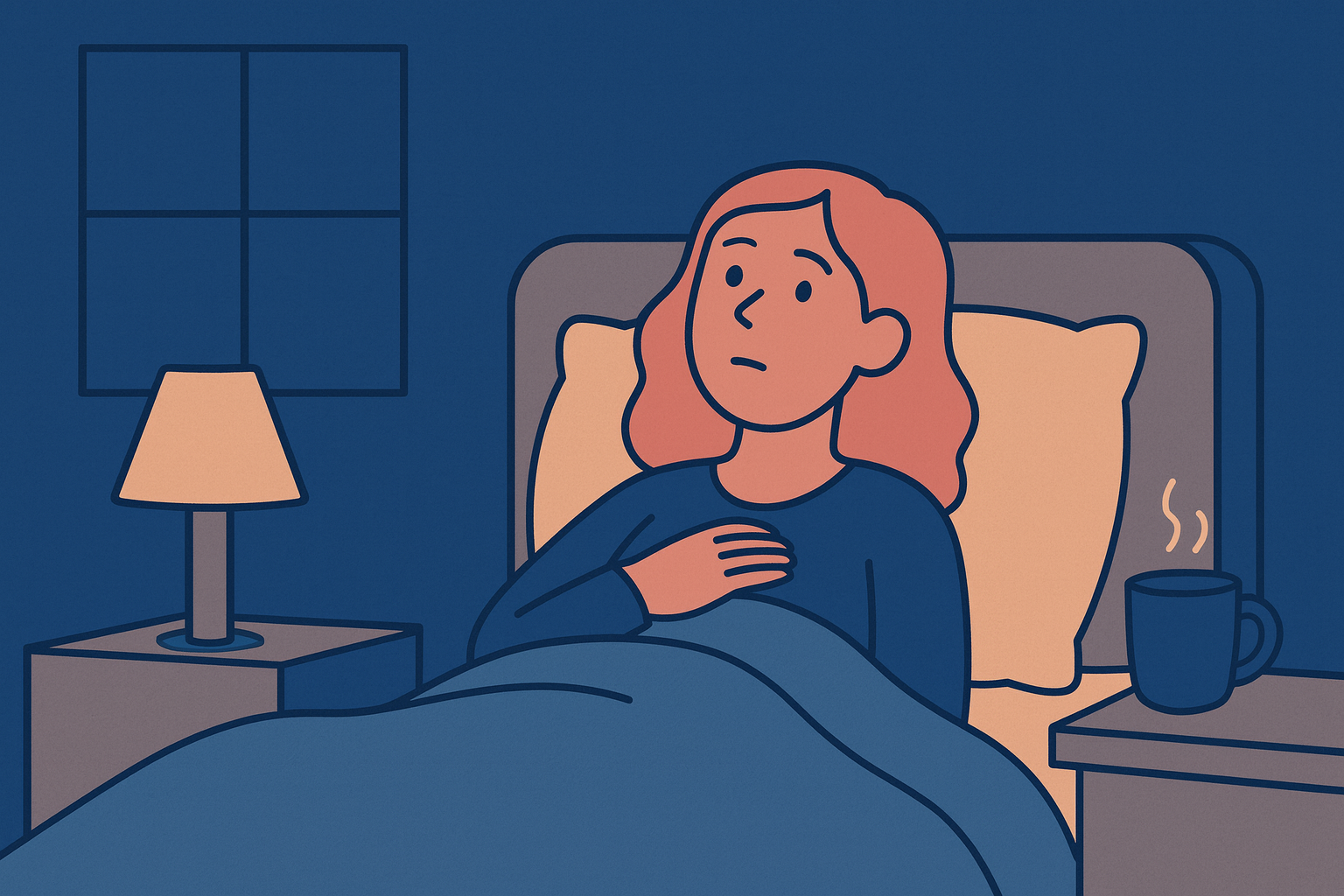
The house is finally quiet. The kids are asleep, the lights are low, and your body feels completely drained. This is the moment you’ve been waiting for all day. But instead of rest, your mind suddenly wakes up. Thoughts start racing. Moments from the day replay. Worries about tomorrow creep in. And there you are, exhausted but wide awake, wondering why your brain refuses to slow down.
If you find yourself overthinking at night, you’re not alone. Many moms experience this, especially after long days of caring for everyone else. It doesn’t mean something is wrong with you. Most of the time, it simply means your mind finally has room to speak after being busy all day.
Why your mind finally gets loud at night
During the day, your attention is pulled in a hundred directions. Someone needs a snack. Someone needs help. Something always needs to be remembered, planned, or fixed. Your brain stays in constant motion, solving problems and managing responsibilities without much pause.
At night, when everything finally goes quiet, all the thoughts you pushed aside start to surface. There are no distractions left, so your mind fills the silence. On top of that, exhaustion lowers your emotional defenses. When you’re tired, worries feel heavier and self doubt feels louder. The same thoughts that seem manageable during the day can feel overwhelming once the lights go out.
The thoughts that tend to show up after bedtime
Nighttime overthinking often follows familiar patterns. Many moms replay moments from the day and wonder if they handled things the right way. Some think about what they didn’t get done and feel behind. Others worry about tomorrow, finances, work, or whether they are doing enough as a parent.
Sometimes it’s not even one clear thought. It’s just a constant hum of pressure and expectation. A feeling that you should be doing more, even though you’re already exhausted. These thoughts can feel intrusive, but they are incredibly common.
When thinking turns into spiraling
Overthinking can feel productive, especially at night. Your brain convinces you that if you keep thinking, you’ll find answers or finally feel at peace. But nighttime thinking rarely leads to solutions. Instead, it creates loops. The same worries repeat themselves without resolution, leaving you more tired and frustrated.
There’s an important difference between problem solving and overthinking. Problem solving leads to action. Overthinking leads to spiraling. At night, when your energy is already depleted, your brain isn’t in the best place to solve anything. It’s simply unloading everything it held in during the day.
How to quiet your mind without forcing sleep
The goal is not to shut your thoughts off completely. Trying to force calm often makes things worse. What helps more is gently signaling to your brain that it is safe to rest.
You might remind yourself that these thoughts can wait until morning. You don’t need to solve everything right now. Some moms find comfort in mentally closing the day by acknowledging that they did the best they could with the energy they had. Others feel calmer when they write down the worries their mind keeps circling, not to fix them, but to give their brain permission to let go for the night.
Simple grounding habits can also help. Dimming lights, slowing your breathing, or replacing scrolling with something gentle can signal that the day is ending. These small shifts help your nervous system understand that it’s okay to slow down.
When nighttime thoughts turn into guilt
For many moms, overthinking at night slowly turns into guilt. Once the house is quiet, your mind may start judging how the day went and how you showed up as a mother. That guilt can feel heavier at night, when there’s nothing left to distract you from it.
This experience is closely connected to why mom guilt often hits hardest at night, especially after emotionally demanding days. If that sounds familiar, you may find this article helpful
What to remind yourself when your mind won’t stop
When your thoughts keep racing, it helps to shift from fixing to soothing. You don’t need perfect thoughts to get rest. You don’t need to feel completely calm before you’re allowed to sleep. Sometimes the most supportive thing you can do is remind yourself that nighttime thoughts are not a reflection of your worth or your parenting.
If overthinking happens occasionally, it’s a normal response to stress and responsibility. If it happens every night, it may be a sign that you’re carrying too much without enough rest or support. Either way, it doesn’t mean you’re weak. It means you’re human, and you’ve been holding a lot.
You don’t have to solve your life at midnight. Tomorrow will look different in daylight. For now, it’s enough to rest. Even if sleep takes time, even if your thoughts linger, your body still deserves the chance to slow down. You did enough today, even if your mind is trying to tell you otherwise.



Leave a Reply