
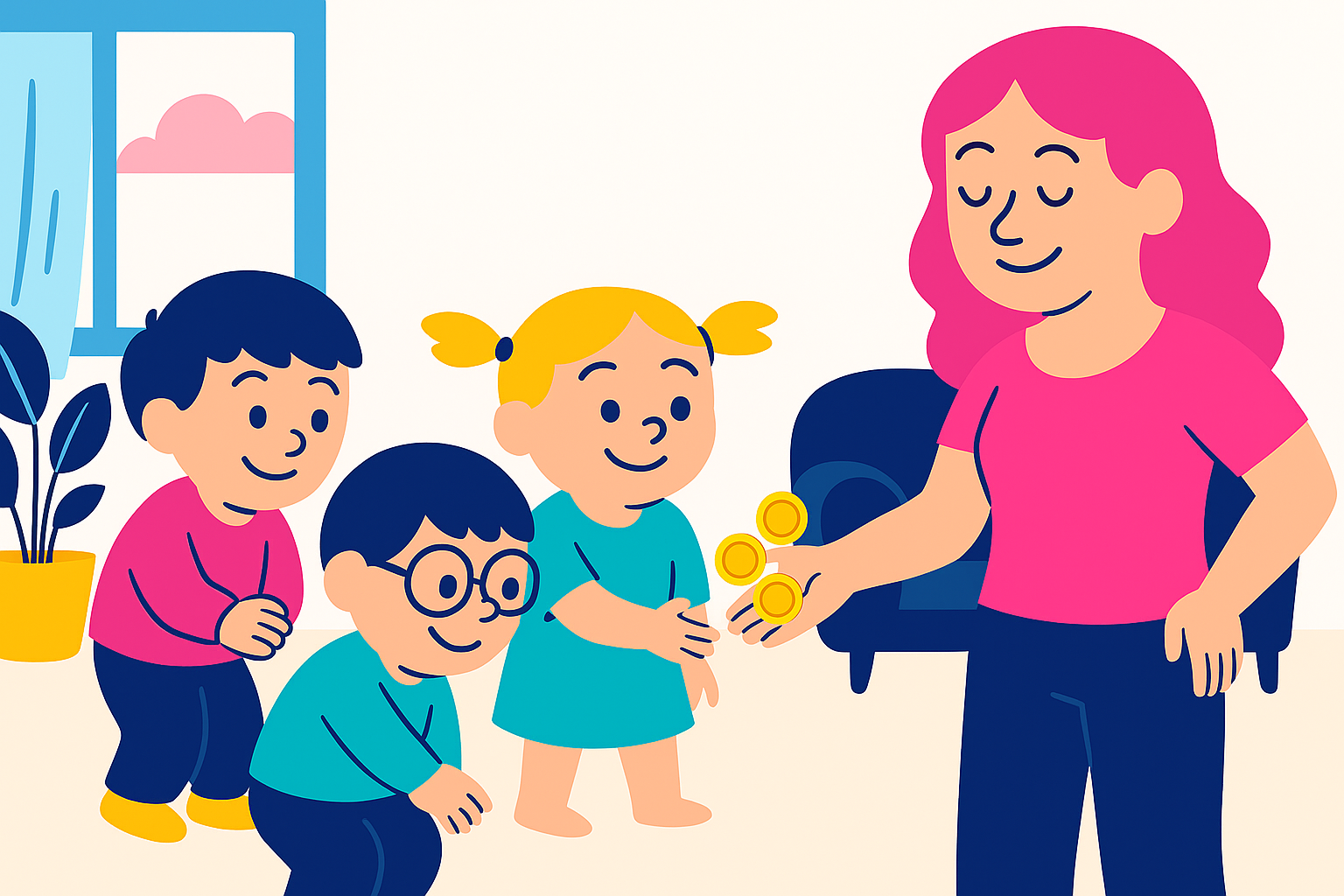
If you’ve ever wondered when to give kids pocket money for chores, you’re not alone. It’s a question that pops up for nearly every parent once their child starts asking for treats, noticing prices, or saying things like, “Do I get paid for that?”. Pocket money or allowance is more than just handing out coins, it’s a powerful teaching tool. When done with intention, it can teach children about responsibility, motivation, work ethic, and financial literacy. But it’s also easy to fall into traps: overpaying, tying money to every act of helpfulness, or using it to bribe rather than to teach.
This article breaks down when to give pocket money for chores, when not to, how much to offer, and how to do it in a way that supports your family values, whether you’re raising a six year old learning to fold laundry or a preteen trying to earn cash for games or outings.
What Age Should Kids Start Getting Pocket Money?
There’s no hard rule, but most parenting experts and family psychologists suggest that between ages 6 and 8 is a good time to begin. At this stage, children:
- Start to understand numbers and basic money concepts
- Can differentiate between wants and needs
- Are eager to help with small tasks
- Respond well to simple, consistent rewards
Let’s say your 7 year old is regularly helping clear the table after dinner. Giving them a small, consistent amount of pocket money for that recurring task can help them feel proud and motivated not just to keep helping, but to start asking deeper questions like, “Should I save this or spend it?”.
How Much Pocket Money Should You Give?
How much is enough? It depends on your budget, your child’s age, and what lessons you want to teach. For many families, 1 to 2 bucks per week is more than enough for young children just starting out. And instead of focusing on the exact number, focus on what the money represents:
- Is it a reward for effort?
- A tool to learn budgeting?
- A way to understand delayed gratification?
For example, giving a 10 year old £3 each week could teach them to save over a month for a small toy. Add a visual savings jar or simple app, and suddenly your child is learning basic financial planning without even realizing it.
You can increase the amount as they grow older and take on more complex or time consuming tasks. Some parents even offer extra money for optional bonus chores, like washing the car or weeding the garden — a great way to introduce real world work concepts in a safe, family focused environment.
When Not to Give Pocket Money for Chores
Here’s where many well-meaning parents stumble. Not every household task should come with a cash reward. There are certain responsibilities that are simply part of family life. Paying your child to brush their teeth, feed the dog, or clean up their own mess can create a mindset where they expect compensation for anything they do, even things that benefit themselves. You have to be cautious about:
- Paying for personal care tasks e.g., brushing hair, cleaning their room.
- Using money as a constant motivator for expected behaviours.
- Attaching money to school performance e.g., paying for grades.
Instead, keep some chores non negotiable. Explain: “Everyone in this house contributes, because we’re a team.” Then reserve pocket money for extra contributions that show initiative or effort beyond the basics.
Why Pocket Money Works — When Used Right
Giving pocket money teaches more than just earning, it introduces real life principles in a safe way. Kids begin to understand:
- Cause and effect when I help, I get rewarded
- Saving and spending: if I want something, I can work toward it
- Delayed gratification: I can save instead of spending everything right away
- Effort and value: the more I do, the more I earn
Let’s say your child is saving for a £20 toy. You agree to give £2 per week for helping with the laundry and walking the dog. After ten weeks, they buy the toy and understand the satisfaction that comes from earning. That’s a powerful life lesson disguised as a small household agreement.
Pocket Money vs. Allowance: What’s the Difference?
Some families use “pocket money” and “allowance” interchangeably, but others see a distinction.
- Pocket money is often earned and linked to tasks or jobs done.
- Allowance is often given regularly, regardless of chores, to teach money management.
Both approaches work, and many parents combine them:
- A base amount each week for budgeting practice.
- Extra opportunities to earn more by doing additional tasks.
This hybrid model teaches that some responsibilities are part of life, while extra effort can lead to extra reward.
Cultural Considerations and Global Parenting Styles
Different cultures approach pocket money in different ways.
- In the UK, pocket money typically starts around age 6–8 and is sometimes tied to chores.
- In the US, “allowance for chores” is very common, especially in middle childhood.
- In some cultures, chores are expected without reward — children are raised to contribute without the expectation of payment, and money is given only on special occasions.
There’s no wrong answer here, just make sure your approach reflects your values, your child’s personality, and your long term goals.
Final Thoughts:
So, When Should You Give Kids Pocket Money for Chores? Start when your child is old enough to understand that money is earned, not just given. Make it age appropriate, consistent, and linked to effort rather than entitlement. And just as importantly, keep some tasks separate from money entirely, so your child grows up understanding that contributing to the home isn’t always transactional, it’s personal.
Teaching kids the value of work and money early doesn’t just prepare them for the world, it builds confidence, resilience, and a sense of independence. And those are worth more than any coin.
Looking for more ideas on building responsibility at home? Check out our guide on how to teach kids responsibility with chores.
Want to listen instead
you can now listen to the episode on spotify



Leave a Reply