
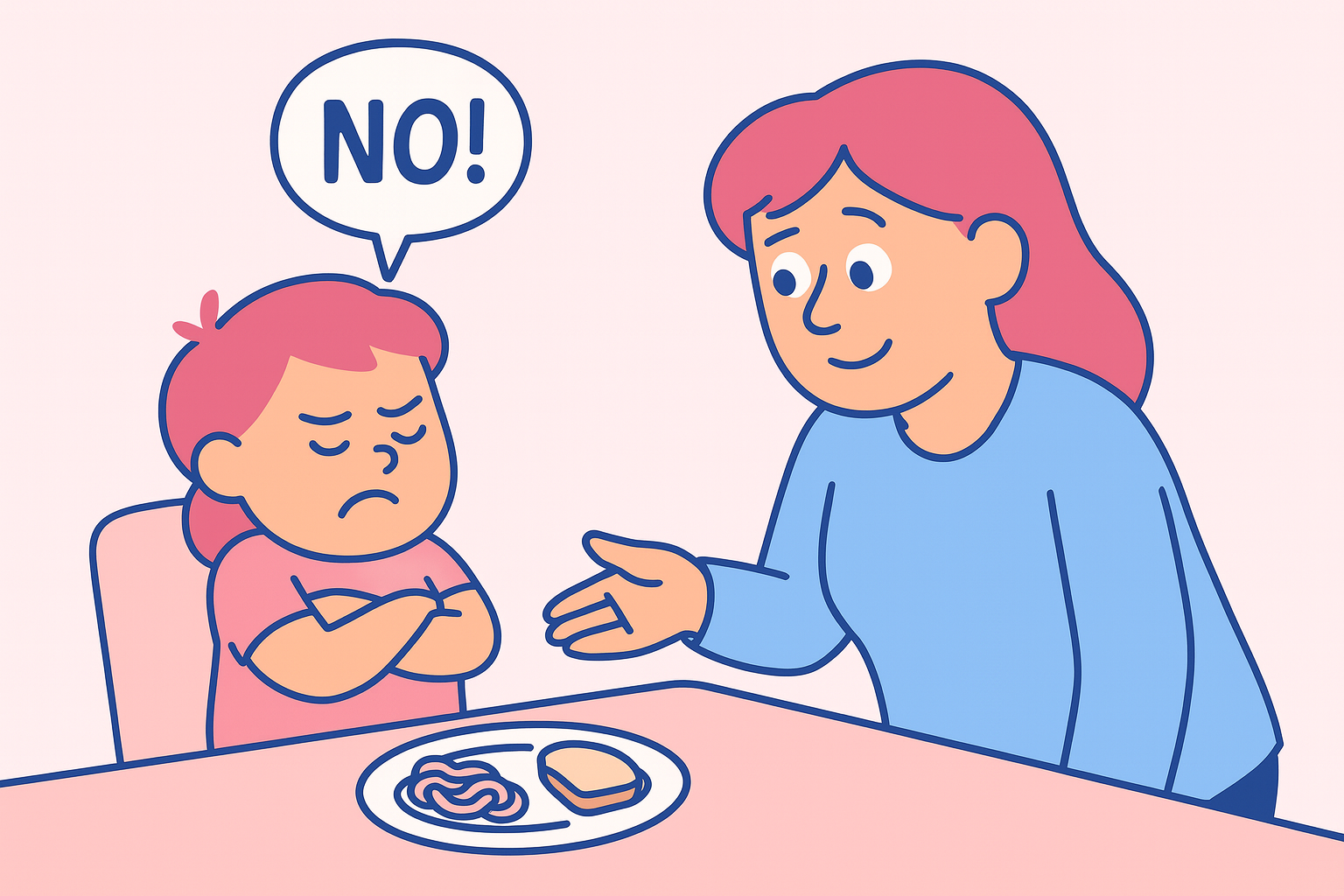
If there’s one thing almost every parent has faced, it’s mealtime drama. From the flat-out “No!” to meltdowns over sandwich shapes, food can stir up big feelings in little bodies. And while our first reaction might be to snap, threaten, or bribe, gentle parenting offers another way. One that teaches respect, builds trust, and makes mealtimes less stressful for everyone.
Here are some of the most common food struggles, and how to respond with empathy while still holding healthy boundaries.
1. Flat-Out Refusal (the “No!” stage)
Your child pushes the plate away and declares, “I’m not eating this!” It’s tempting to dig in for battle, but that usually makes things worse.
Gentle approach: Acknowledge their feelings: “I see you don’t want this right now.” Offer a limited choice to give them some control: “You can eat the pasta or just have the bread.” And most importantly, stay calm. Power struggles around food rarely end well.
2. The “Wrong” Food Meltdown
Maybe you cut the sandwich wrong. Maybe the cereal is too soggy. Maybe you used the wrong plate. Suddenly, your kitchen feels like a battlefield.
Gentle approach: Validate their feelings: “You wanted it a different way.” If the fix is simple and reasonable, go ahead and swap the plate. But if it’s wasteful or unrealistic, hold the boundary: “This is how it is today.” Then gently remind them, “Sometimes food looks different, but it still tastes the same.” This teaches flexibility without dismissing their frustration.
3. Only Wants Snacks or Dessert
You’ve made dinner, but all they want are cookies or chips. Cue the negotiations.
Gentle approach: Set a clear boundary: “Snacks come after meals.” Offer a compromise without turning dessert into a bargaining chip: “You don’t have to eat everything, but you need some real food first.” Keep your tone neutral. Dessert is not a reward. It is part of a balanced diet.
4. Testing Boundaries in Public (Restaurant Refusal)
Few things test your patience like a food meltdown in a crowded restaurant. The urge to hiss “Just eat it!” is strong.
Gentle approach: Stay calm and lower your tone instead of escalating. Offer a choice: “Would you like to eat the pasta or have some bread?” Hold the line: “We’re not ordering something else.” And if the meltdown continues, take a short break outside. Sometimes the reset is what everyone needs.
5. Sensory Overload (Textures, Smells, New Food)
Strong smells, slimy textures, or new flavors can overwhelm a child, leading to gagging or tears.
Gentle approach: Respect their limits and never force food. Instead, encourage a “taste test” bite without pressure. Say, “You don’t have to finish it. Just try one bite.” Celebrate small progress, even if they just lick the food or touch it with their tongue. Building comfort takes time.
6. When You’ve Already Lost Patience
We’ve all been there. The words slip out: “Just eat it already!” But frustration only creates resistance.
Gentle repair: Pause and take a breath. Then reset: “This is dinner. You can choose how much you eat.” Avoid guilt or shame. It only makes mealtimes stressful in the long run. Kids remember the tone more than the food.
7. The “Finish Your Plate” Struggle
Your child eats a few bites, then says, “I’m done,” even though most of the food is still sitting there. The instinct? “You can’t leave the table until you finish everything.”
Gentle approach: Respect their appetite: “Listen to your tummy. If you’re full, that’s okay.” Encourage small wins: “Try one or two more bites and see how you feel.” Serve smaller portions so finishing feels manageable, and let them ask for seconds. Model healthy eating by enjoying the same food yourself and keeping dessert neutral. Food is about nourishment, not negotiation.
Final Thoughts
Food battles are tough, but they don’t have to define mealtime. Gentle parenting reminds us that eating is about trust. Trusting our kids to listen to their bodies, and trusting ourselves to set calm, consistent boundaries.
At the end of the day, our goal isn’t to make kids clean their plates. It’s to help them build a healthy, lifelong relationship with food and to keep the dinner table a place of connection, not conflict.
You want to handle child tantrum in public with gentle parenting? read here



Leave a Reply